 Canada
 United States


How to Measure for a Bathroom Vanity: A Step-by-Step Guide
Measuring for a bathroom vanity involves more than checking wall width. Before choosing a vanity, measure the available wall width, depth, plumbing location, and surrounding clearances to ensure it fits comfortably and functions properly.
This guide explains what to measure before buying a bathroom vanity so you can avoid sizing issues and choose one that fits your space.
Bathroom Vanity Measurement Checklist
Before you begin, you'll need:
- Tape measure
- Pencil and paper
- Painter's tape (optional)
Then measure:
- Wall width
- Available depth
- Plumbing location
- Vanity-to-toilet clearance
- Vanity-to-bathtub clearance
- Door and drawer clearance


How to Measure for a Bathroom Vanity
Step 1: Measure the Wall Width
Measure the available wall space where the vanity will be installed, considering nearby walls, bathtubs, toilets, cabinets, or other fixtures.
This helps determine the maximum bathroom vanity size your space can comfortably accommodate.
Step 2: Measure the Depth
Measure from the wall out toward the center of the bathroom. This helps determine the maximum vanity depth your bathroom can accommodate.
The bathroom door swing and door frame will often determine whether a narrow-depth or regular-depth vanity is the better fit.
Also check that cabinet doors, drawers, and nearby fixtures can open fully once the vanity is installed. For example, a fully extended vanity drawer may interfere with the door swing.
Tip: Use painter's tape to mark the vanity's planned depth on the floor. This makes it easier to visualize the space and check clearances before
you buy.
Step 3: Locate the Plumbing
Find the drain pipe and water supply lines where the vanity will be installed. Measure their location before choosing a vanity.
You'll want the plumbing to align with your vanity's cabinet configuration, whether that's a drawer with a P-trap cutout or a cabinet with doors.
If your plumbing comes up from the floor rather than the wall, installing a vanity with drawers may be more difficult because the bottom drawer can interfere with the plumbing. In this case, a vanity with doors is often a better option.
Depending on your bathroom layout and renovation plans, you can use your existing plumbing or relocate it to accommodate a different vanity. Relocating the plumbing typically involves additional installation costs.
Step 4: Check Clearances
Measure the space around where the vanity will be installed, including:
- Vanity-to-toilet clearance
- Vanity-to-bathtub clearance
- Door swing
- Drawer and cabinet door clearance
If the vanity is positioned next to a toilet, we recommend leaving at least 18 inches between the edge of the vanity and the center of the toilet for comfortable use (Figure 1. Vanity-to-Toilet Clearance).
If the vanity is positioned next to a bathtub, we recommend leaving at least 12 inches between the vanity and the bathtub to help reduce prolonged water exposure, which may damage the vanity over time (Figure 2. Vanity-to-Bathtub Clearance).
Before ordering, make sure the vanity can fit through doorways, hallways, stairways, and other access points leading to the bathroom.


Choosing the Right Vanity Size
Use your measurements to compare your available space with common bathroom vanity sizes.
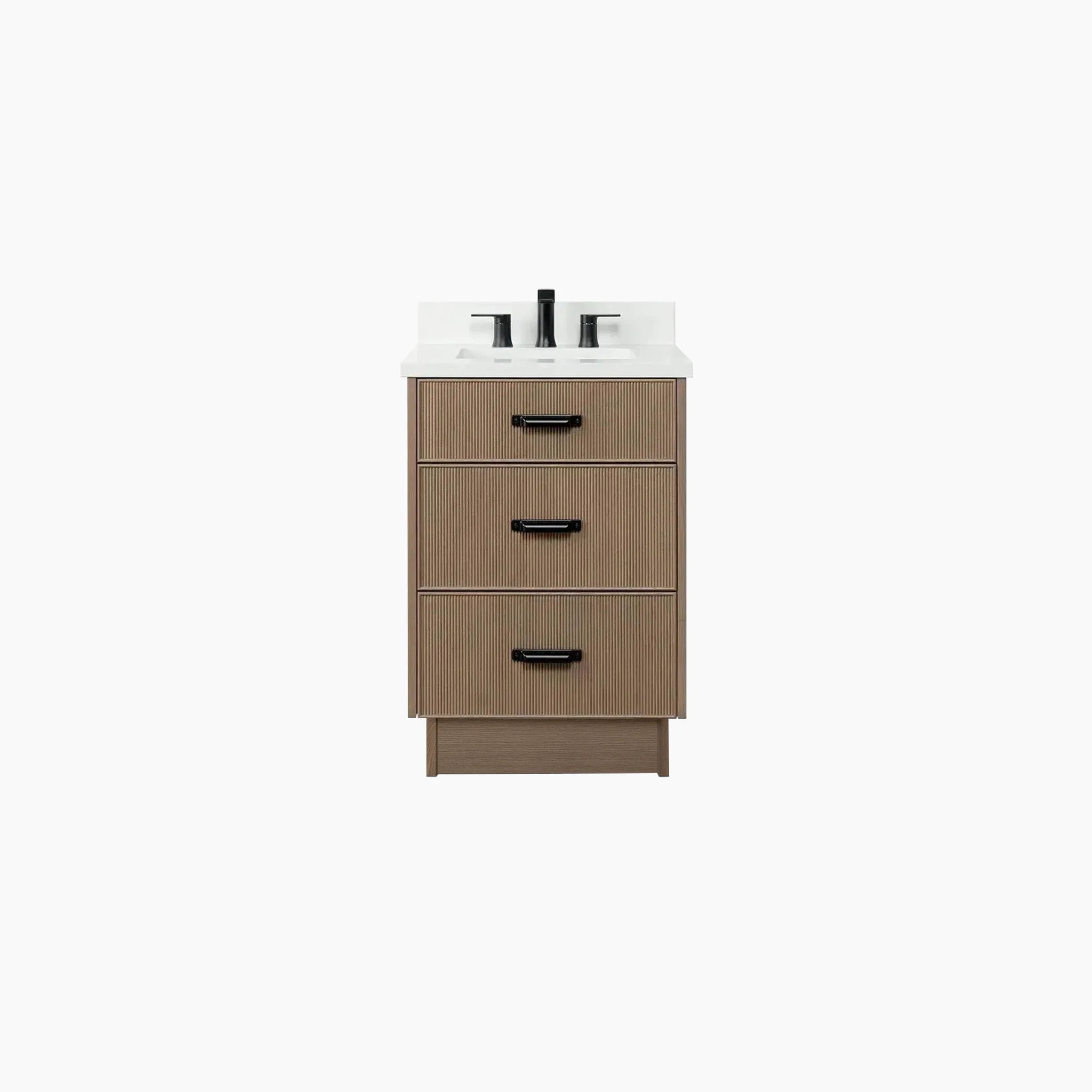
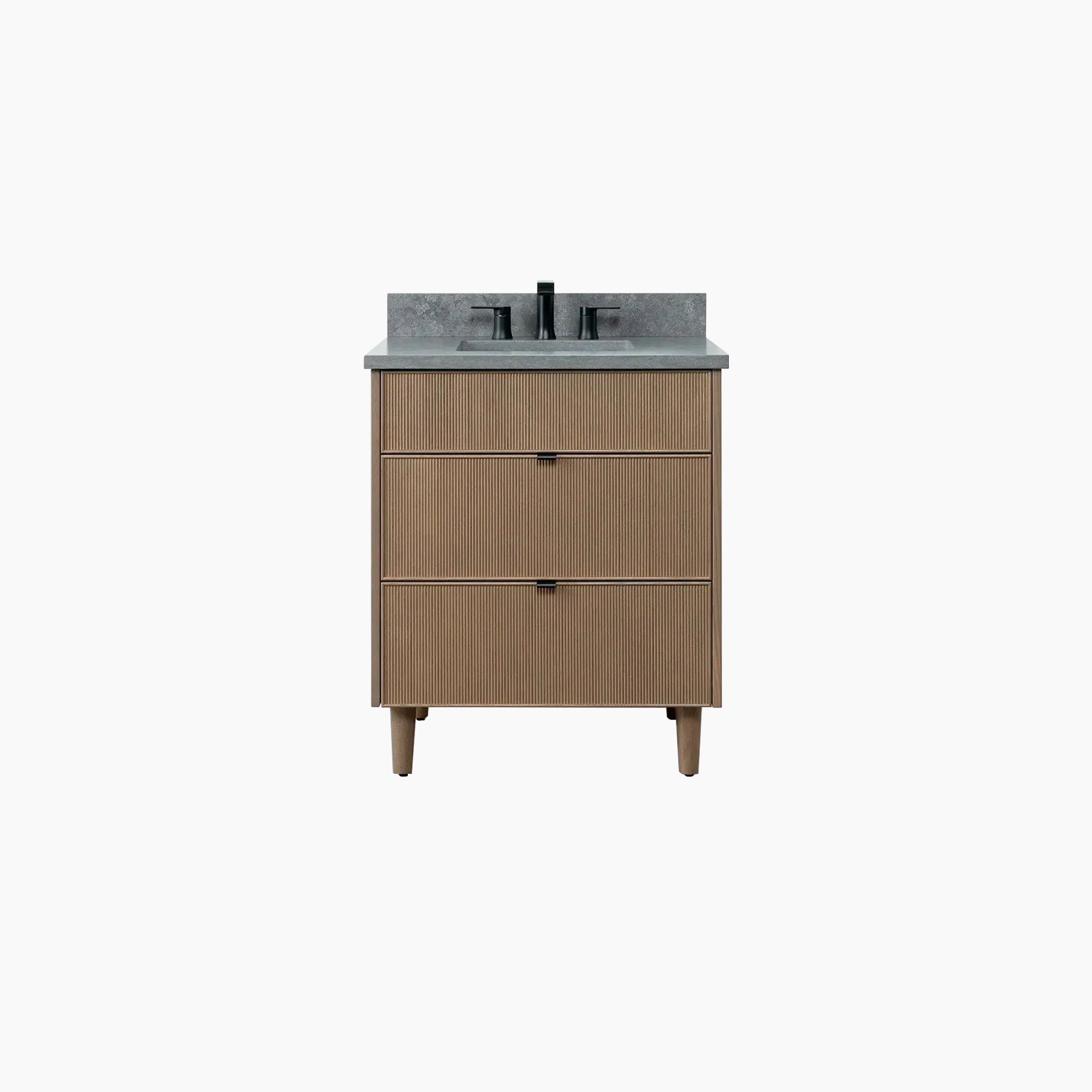
- 24 inch and 30 inch vanities work well in powder rooms and smaller bathrooms.
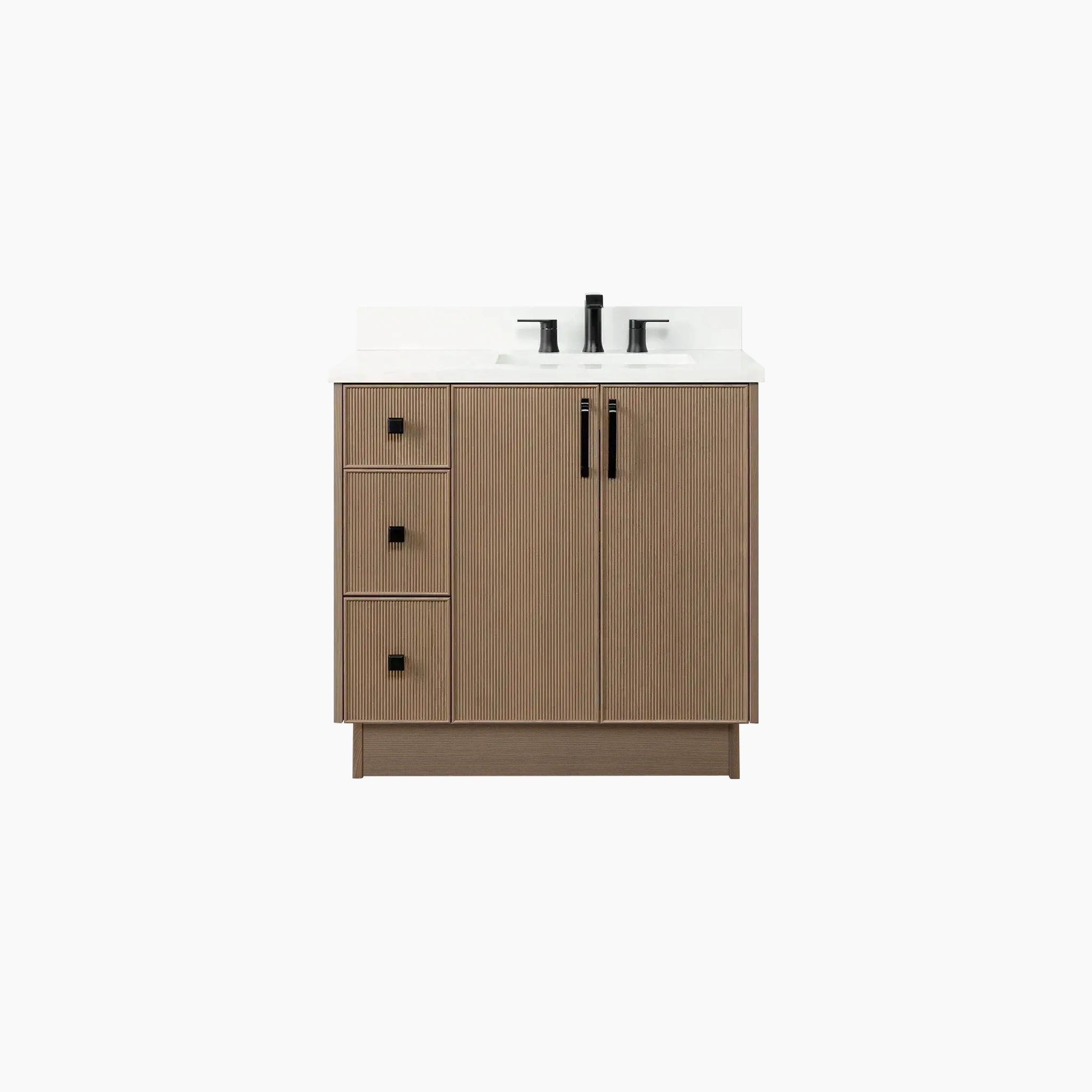
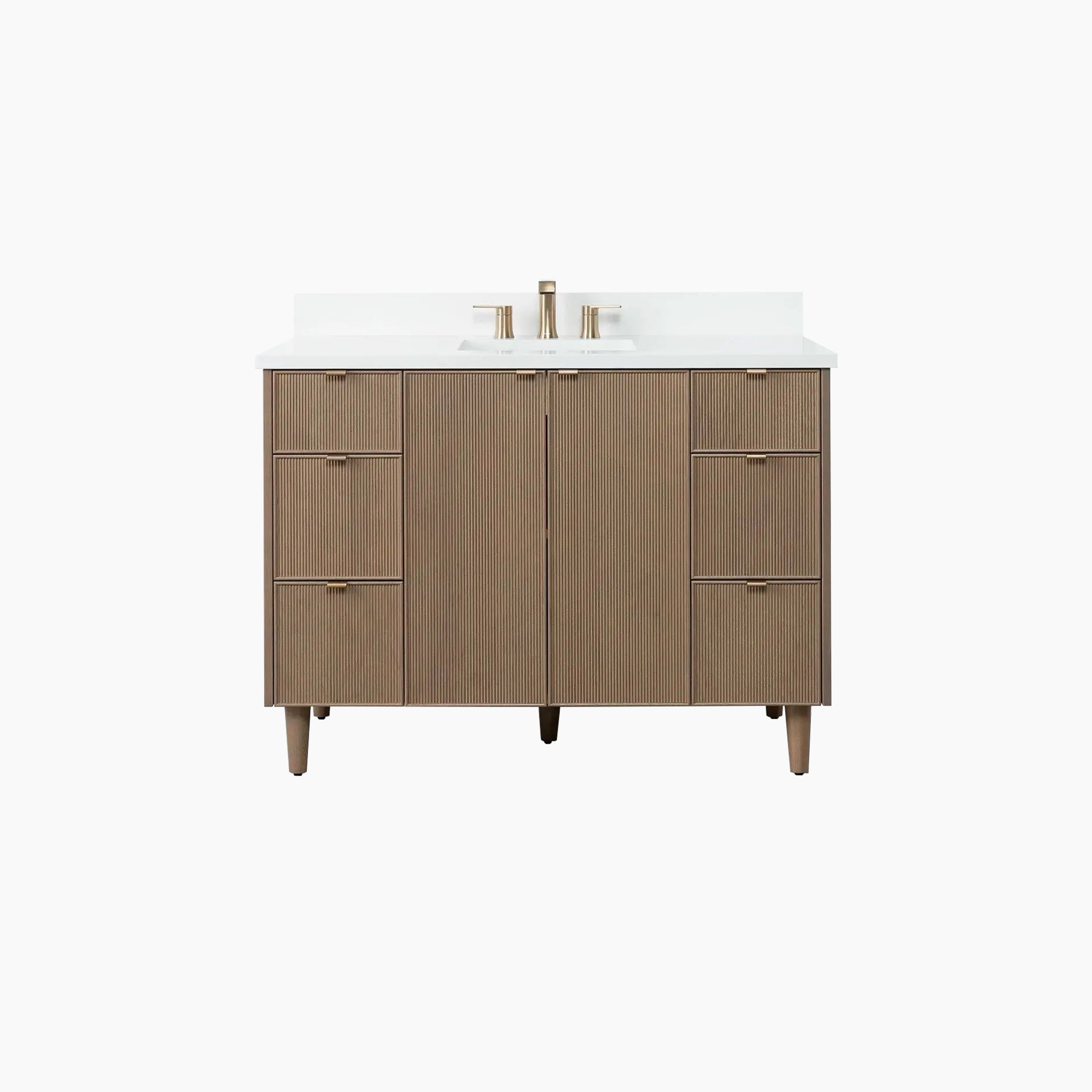
- 36 inch, 42 inch, and 48 inch vanities are popular choices for standard single-sink bathrooms.
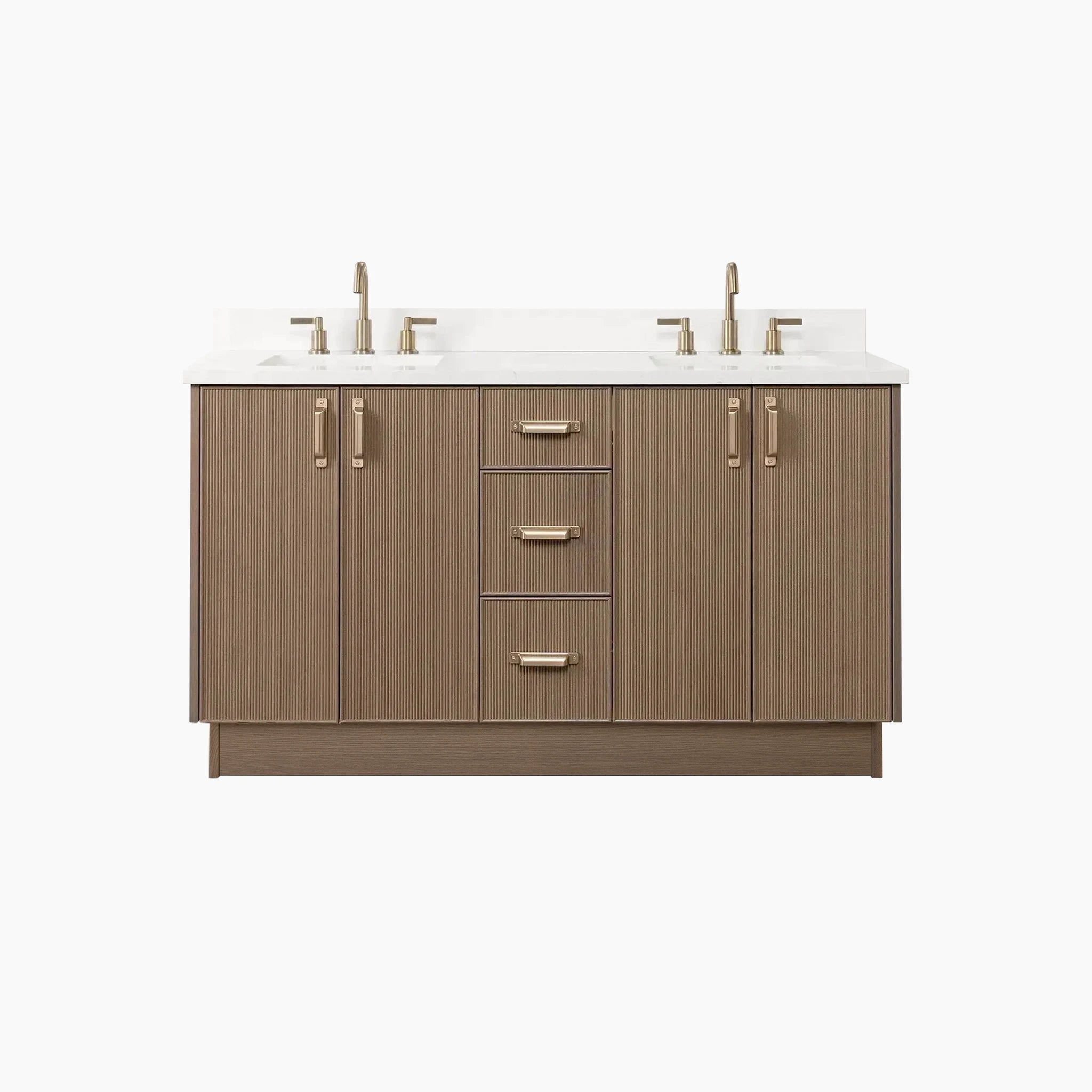
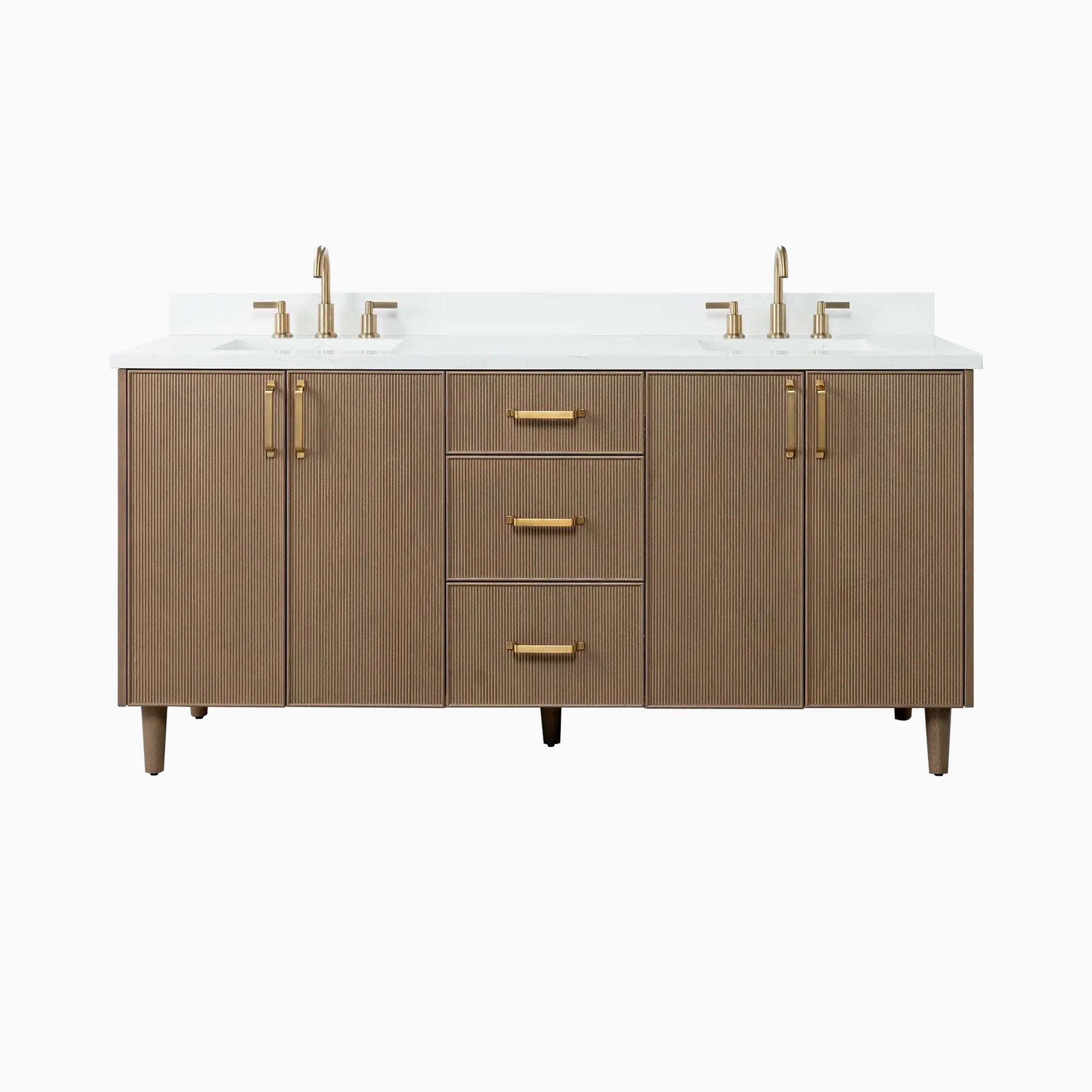
- 60 inch and 72 inch vanities are often used in larger bathrooms and double-sink layouts.
Before ordering, compare the product dimensions with your measurements to make sure the vanity will fit your space.
If space is limited, a narrow-depth vanity or floating vanity may provide a better fit.
Frequently asked questions
Answers to common questions about measuring for a bathroom vanity.
Measure the available wall width, vanity depth, plumbing location, and surrounding clearances before choosing a bathroom vanity. Compare your measurements with the product dimensions before ordering.
In many cases, yes. If the new vanity is compatible with your existing drain and water supply locations, you may not need to relocate the plumbing. Otherwise, some plumbing modifications may be required.
Wall width is the starting point, but vanity depth, plumbing location, and nearby clearances are equally important for ensuring the vanity fits and functions properly.
Most standard bathroom vanities are around 21 to 22 inches deep, while narrow-depth vanities are designed for smaller bathrooms. Always check the product dimensions before purchasing, as cabinet and countertop depths can vary.
Measure both, but use the countertop's full width and depth when checking whether the vanity will fit your space. Countertops are often slightly larger than the cabinet.
Only if there is enough wall space, clearance around nearby fixtures, and plumbing that can accommodate the larger vanity.

